Q7. Which Renaissance artist painted "The Last Supper" and the "Mona Lisa"?
of Can You Still Ace This High School History Quiz?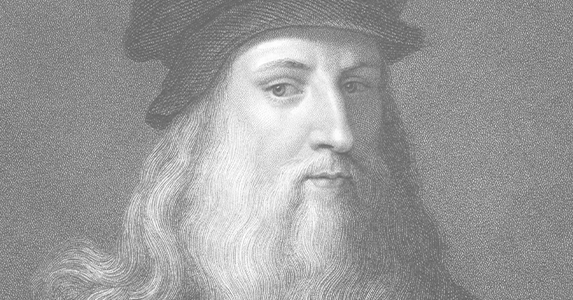
The Renaissance Synthesis: Evaluating Intellectual Heritage and Polymathic Legacy
The Italian Renaissance represents a transformative epoch in Western history, serving as the bridge between the Middle Ages and the Modern era. Central to our academic evaluative series, "Can You Still Ace This High School History Quiz?", is the assessment of a participant's ability to identify the central figures of this intellectual rebirth. The study of the Renaissance is not merely an exercise in art appreciation; it is a fundamental investigation into the origins of humanism, scientific inquiry, and the secularization of Public Policy. To achieve an elite score on a high school history evaluation, one must demonstrate the Mental Agility & Focus required to distinguish between the distinct stylistic and philosophical contributions of the period’s most iconic masters—a cognitive demand often mirrored in high-level Executive Education.
Strategic Alignment with the Quiz Theme: Validating Cultural and Historical Literacy
The query regarding the creator of "The Last Supper" and the "Mona Lisa" is strategically positioned to validate the participant’s retention of core secondary education modules. In a Top-ranked curriculum—one designed to facilitate the transition to an Ivy League Campus Experience—this period is framed as the ultimate convergence of art, science, and engineering. Understanding these connections is a prerequisite for advanced academic pursuits, such as Online Master's Programs or a Doctorate Degree Online / PhD, where interdisciplinary synthesis is paramount.
This question supports the quiz theme by evaluating Memory Retention Techniques regarding the archetype of the "Renaissance Man." The ability to identify the correct artist requires more than a superficial recognition of famous paintings; it demands a precise understanding of the individual whose notebooks explored anatomy, botany, and flight long before they became formalized disciplines. For professionals who have pursued Bachelor's Degree Completion or are currently engaged in Professional Development Courses, this question tests the foundational Executive Function Training of the brain to categorize historical figures who redefined the limits of human potential. Recognizing this artist proves that the participant has maintained a level of historical literacy that meets the rigorous standards of Regional Accreditation (WASC, HLC, etc.).
Preview of Questions: Analytical Deconstruction and Instructional Design
To understand why this specific question is a cornerstone of the "Can You Still Ace This High School History Quiz?" assessment, we must examine the pedagogical utility of the query through the lens of modern Instructional Design Tools. The structure of the question is designed to target "Universal Literacy Icons," ensuring that the "Ace" status is reserved for those with a firm grasp of global cultural milestones, potentially enhanced by an E-Learning Platform or Educational Immersion Programs.
The Question Focus:
Which Renaissance artist painted "The Last Supper" and the "Mona Lisa"?
The question employs two "masterwork anchors." For those who have participated in Art History Exploration or Academic Study Tours, these works represent the pinnacle of sfumato technique and psychological depth in portraiture.
Detailed Analysis of the Options and Strategic Distractors:
- Michelangelo: This is a "peer-level" distractor. While Michelangelo was a contemporary and a fellow titan of the High Renaissance, his primary historical markers are the Sistine Chapel ceiling and the statue of David. Selecting this indicates a participant understands the era but lacks the Mental Agility to distinguish between the sculptural focus of Michelangelo and the painterly, scientific focus of the correct answer.
- Leonardo da Vinci (Correct Answer): Selecting Da Vinci indicates a precise grasp of the polymathic nature of the 15th and 16th centuries. His work is a staple of Heritage Conservation Tours and is often featured in Exclusive Museum Access programs. Understanding his role is essential for grasping the history of Data Science / Business Analytics precursors—specifically his use of empirical observation and systematic documentation.
- Raphael: This serves as a "stylistic" distractor. Known for his clarity of form and ease of composition (e.g., The School of Athens), Raphael represents the synthesis of the Renaissance. Choosing this option indicates a failure in specific attribution, a skill often refined through Corporate Language Training or specialized humanities courses.
- Donatello: This acts as a "chronological" distractor. As an Early Renaissance sculptor, Donatello predates the "High Renaissance" peak of the other three. A participant selecting this lacks the precision required for Professional Indexing Services or scholarly research, as they are conflating the foundational stages of the Renaissance with its mature realization.
Conclusion: Historical Precision as a Hallmark of Cognitive Enhancement
Successfully navigating this assessment is a testament to one's ongoing commitment to intellectual rigor. The legacy of Leonardo da Vinci is not merely a set of images to be memorized; it is a lesson in the integration of disparate fields of knowledge—a concept frequently analyzed in an Online MBA context or within Global Leadership Seminars.
For individuals seeking Cognitive Enhancement through history, accurately identifying these milestones ensures a robust mental framework. It demonstrates that you can still "ace" the standards set by a Non-profit University system. Whether you are a PMP Certified Project Manager or a student researching nursing programs near me, the ability to anchor modern creative and analytical processes in their historical precedents is an invaluable trait. Maintaining this knowledge is a form of Neuroplasticity Exercise that keeps the mind sharp for the challenges of the modern global economy, mirroring the dedication required for an Official Language Proficiency Test such as IELTS / TOEFL Preparation.
Disclaimer
The information and assessments provided in this article and the associated quiz are intended solely for educational, informational, and personal enrichment purposes. While every effort has been made to ensure the accuracy of the historical facts presented, this content does not constitute formal academic credit, legal advice, or a professional recommendation for any Accredited degree program. The results of the quiz should be interpreted as an informal review of general knowledge and should not be used as a definitive measurement of intelligence or professional qualification. References to specific vocational or academic paths, such as nursing schools near me, cna classes near me, or lpn programs near me, are for contextual illustration of educational diversity and do not imply an endorsement or professional medical certification.
- A
- B
- C
- D