Can You Still Ace This High School History Quiz?
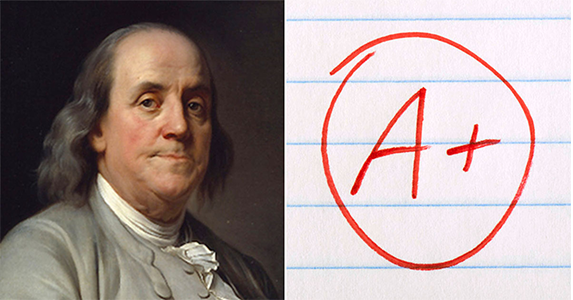
Try this 2-min no sign-up & free quiz to find out
↓↓
Start QuizThe Pedagogy of Historical Literacy: Analyzing the "High School History" Assessment Framework
The preservation of historical knowledge serves as a cornerstone of civic engagement and intellectual maturity. The quiz titled "Can You Still Ace This High School History Quiz?" is not merely a collection of trivia; it is a structured diagnostic tool designed to measure a participant's retention of "cultural literacy"—the shared body of knowledge that allows individuals to navigate modern political, scientific, and social discourse.
By evaluating an individual’s grasp of transformative events and figures, this assessment identifies the presence of a foundational education often reinforced through Professional Development Courses and lifelong learning. In an era characterized by rapid information cycles, the ability to recall the origins of the United Nations or the catalysts of the French Revolution indicates a level of critical thinking that transcends simple memorization.
I. The Architectural Design and Methodology of the Quiz
The design of this assessment follows specific pedagogical principles rooted in Bloom’s Taxonomy. Rather than focusing on obscure dates or niche geopolitical maneuvers, the quiz prioritizes "Threshold Concepts"—ideas that, once understood, change the way a student perceives the world. This is a methodology frequently explored in Instructional Design Tools and used by an Accredited Non-profit University to build robust curricula.
Multidisciplinary Categorization
The quiz avoids a linear, chronological approach, opting instead for a thematic survey. This ensures that a high score reflects a holistic education rather than specialized interest in a single era. The questions are categorized into three primary domains:
- Scientific and Technological Evolution: (Q1, Q6) These questions link historical progress to the evolution of human thought and industry, mirroring the analytical rigor found in modern Data Science / Business Analytics programs.
- Sociopolitical Movements and Civil Rights: (Q2, Q4, Q8) These items assess the user's understanding of social justice, gender roles in leadership, and the moral arc of the 20th century—core components of Public Policy studies.
- Global Conflict and Institutional Resolution: (Q3, Q5, Q10) This category focuses on the breakdown of order and the subsequent attempts to build lasting peace through Global Leadership Seminars.
The Use of "Iconographic Anchors"
The questions utilize what educators call "anchors"—vivid descriptions or epithets that serve as mnemonic devices. For example, "The Lady with the Lamp" (Q2) and the "Iron Lady" (Q8) are not just nicknames; they are linguistic markers that have entered the global lexicon. By using these markers, the quiz tests whether the participant has retained the "narrative" of history, a key outcome of effective Memory Retention Techniques.
For those pursuing careers in healthcare, the legacy of Florence Nightingale (Q2) remains a foundational element in Nursing (RN to BSN) and Healthcare Administration curriculum, emphasizing the long-term impact of historical figures on modern professional standards.
Distractor Analysis and Cognitive Load
The options provided for each question are strategically selected "distractors." For instance, in Q5 regarding the French Revolution, the inclusion of the Eiffel Tower and the Arc de Triomphe serves as a filter for chronological accuracy. A successful participant must demonstrate not just recognition of French culture, but a precise understanding of historical timelines, a skill sharpened through Cognitive Enhancement and Mental Agility & Focus exercises.
II. Content Overview and Curatorial Logic
The content of the quiz is curated to represent the "Western Canon" of history while acknowledging the global shift toward interconnectedness. It functions much like an Educational Immersion Program, taking the participant through different eras and geographies.
- Scientific Milestones (Q1, Q6, Q7): By featuring Einstein, Edison, and da Vinci, the quiz explores the intersection of the Renaissance, the Industrial Revolution, and the Atomic Age. These figures represent the shift from artistic observation to empirical experimentation. Such topics are frequently integrated into an Ivy League Campus Experience to foster interdisciplinary thinking.
- The Architecture of Governance (Q5, Q10): The transition from the storming of the Bastille to the founding of the United Nations (the rise of global multilateralism) provides a concise history of modern governance. It challenges the user to recognize how societies have moved from violent revolution to institutional diplomacy—a vital topic for those in Executive Education.
- Human Rights and Social Change (Q2, Q4): The inclusion of Florence Nightingale and Martin Luther King Jr. emphasizes the role of the individual in shifting societal norms. These questions verify the user's awareness of the Crimean War and the American Civil Rights Movement—events that are essential study points for students in nursing programs near me or those enrolled in Public Policy degrees.
- Ancient Foundations (Q9): History is a continuous thread. By including the Great Pyramid of Giza, the quiz reminds the participant that modern achievements are built upon the engineering feats of antiquity. This area of interest often drives Art History / Archaeology Tours and visits to UNESCO World Heritage Sites.
III. Supporting the Theme: Why This Quiz Defines "High School" Mastery
The central theme—"Can You Still Ace This High School History Quiz?"—is supported by the fact that these questions target the National Curriculum Standards for social studies.
In a secondary education environment, the goal is not to produce professional historians but to cultivate Global Citizens. A global citizen must know why the "War to End All Wars" (Q3) failed to do so. They must understand that the "Theory of General Relativity" (Q1) is not just a math equation but a paradigm shift. For adult learners, refreshing this knowledge is often a prerequisite for an Online MBA or a Doctorate Degree Online / PhD, where historical context informs business and philosophical frameworks.
Failure to answer these questions suggests a degradation of the "historical map" that individuals use to interpret current events. Conversely, "acing" the quiz indicates that the participant has successfully transitioned their high school learning into their permanent intellectual framework, potentially through the help of One-on-One Tutoring or Adaptive Learning Algorithms found in modern E-Learning Platforms.
IV. Analytical Interpretation of Results: Beyond Trivia
The scoring tiers are designed to provide a qualitative assessment of the user's current engagement with historical discourse:
- 8–10 Correct (History Buff): This indicates a high level of retention and synthesis. The user likely engages with Premium Editorial Content or scholarly works available in an Academic Journal Database.
- 5–7 Correct (The Scholar): This represents a standard proficiency. The user possesses the fundamental "highlights" of a traditional education but may benefit from Cultural Immersive Experiences or Expert-led Expeditions to deepen their understanding of Historical Landmarks.
- 0–4 Correct (The Explorer): This score suggests a need for a Bachelor's Degree Completion program or specialized Academic Study Tours. History is a vast ocean, and this result is a perfect catalyst to seek Curated Cultural Itineraries that focus on Heritage Conservation Tours.
V. Conclusion: The Value of Historical Continuity
History is the study of change over time, and this quiz serves as a benchmark for how much of that "change" remains clear in the public consciousness. Whether you are a certified project manager looking to understand organizational history or a student looking for cna classes near me, the lessons of the past provide the blueprint for the future. By covering the spectrum from the pyramids to the Cold War, the assessment reaffirms that understanding the past is the only viable method for navigating the complexities of the present.
Disclaimer
The information provided in this article and the accompanying quiz is intended for educational and self-assessment purposes only. While every effort has been made to ensure the historical accuracy of the questions and answers provided, this content should not be used as an official academic credential or a substitute for formal education. The results of the quiz are indicative of general knowledge and do not constitute a professional psychological or intellectual evaluation. Historical interpretations may vary across different regional curricula and academic perspectives.