Q1. This famous physicist is best known for developing the "Theory of General Relativity" and is often pictured with his signature wild hair. Who is he?
of Can You Still Ace This High School History Quiz?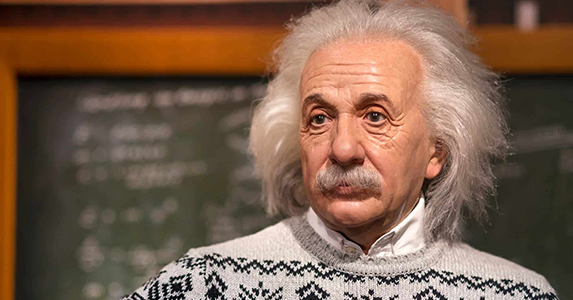
The Relativity of Academic Recall: Evaluating Historical Literacy and Cognitive Enhancement in Secondary Education
The transition from foundational secondary education to specialized adulthood often leaves a significant gap in general historical knowledge and high-level cognitive function. Our curated assessment, "Can You Still Ace This High School History Quiz?", is designed to measure the Memory Retention Techniques and the foundational intellectual milestones that shaped the 20th century. While history is often perceived as a series of political maneuvers and territorial conflicts, the history of science remains one of its most critical pillars. By analyzing the life and legacy of iconic figures, we challenge the participant’s Mental Agility & Focus—skills typically sharpened through Executive Education and rigorous academic training—to distinguish between distinct scientific eras and the cultural footprints of the world's greatest thinkers.
Bridging Scientific Milestones and Historical Context
The inclusion of a question regarding the developer of the "Theory of General Relativity" serves as a strategic cornerstone for this quiz. In a high-quality high school history curriculum, particularly those aligned with Top-ranked international standards, the early 1900s are framed by more than just the industrial revolution and the World Wars. The intellectual revolution occurring simultaneously—led by figures like Albert Einstein—fundamentally altered the course of human history, influencing everything from philosophy to Public Policy.
This specific question supports the quiz’s theme by testing associative memory and contextual awareness. To "ace" a high school history quiz, one must do more than recall dates; one must identify the figures whose contributions redirected the trajectory of global development and defense technology. The recognition of this physicist represents a benchmark for whether a participant retains the "Big Picture" of the 20th-century intellectual landscape, a key component of Cognitive Enhancement through historical study. For professionals looking to bridge these knowledge gaps, many Online Master's Programs now emphasize the intersection of scientific history and leadership.
Preview of Questions: The Anatomy of Intellectual Recognition
To understand how this question functions within the broader quiz, we must dissect the query and the strategic implications of its provided options through the lens of Instructional Design.
The Question Focus:
This famous physicist is best known for developing the "Theory of General Relativity" and is often pictured with his signature wild hair. Who is he?
The query utilizes two distinct cognitive triggers: Conceptual Achievement (General Relativity) and Iconographic Recognition (the visual archetype of the scientist). In a pedagogical sense, high-level education—ranging from Bachelor's Degree Completion programs to Ivy League Campus Experiences—teaches students to link a person's physical "brand" with their historical impact. If a participant cannot bridge the gap between the most famous scientific theory of the modern era and its author, it indicates a degradation of the Executive Function required to categorize complex historical data.
Analysis of the Options and Professional Context:
- Isaac Newton: This option serves as a chronological distractor. While Newton is a titan of physics, his "Principia Mathematica" belongs to the 17th century. Within the context of Art History & Archaeology Tours or history of science modules, confusing Newton with Einstein represents a failure in chronological mapping. Newton represents the Enlightenment; Einstein represents Modernity.
- Albert Einstein (Correct Answer): Selecting Einstein demonstrates an accurate grasp of 20th-century history. Einstein’s work not only redefined physics but also had massive geopolitical consequences. His legacy is a staple in Professional Development Courses that focus on disruptive thinking and innovation. Understanding his role is essential for anyone pursuing an Online MBA or a degree in Data Science, as his theories laid the groundwork for modern computational physics.
- Nikola Tesla: Tesla represents the "technological" distractor. Often conflated with Einstein in popular culture, Tesla’s contributions were primarily in electrical engineering. In the realm of Computer Science & Cybersecurity, Tesla is a hero of innovation, but in a history quiz, he tests whether a student can differentiate between theoretical physics and applied engineering.
- Stephen Hawking: This option acts as a contemporary distractor. Hawking is a figure of the late 20th and early 21st centuries. Selecting him indicates a failure to differentiate between the pioneers of early modern physics and the theoretical cosmologists of the recent past—a distinction often emphasized in a Doctorate Degree Online / PhD curriculum.
Conclusion: Why This Question Matters for Lifelong Learning
Acing a high school history quiz requires a multidisciplinary approach. By including questions that touch upon the history of science, we ensure that the "Ace" status is reserved for those who understand that history is not just a record of kings, but a record of ideas. This approach mirrors the Global Leadership Seminars and Executive Education models, where historical context is used to inform future decision-making.
Whether you are a student preparing for an Official Language Proficiency Test or a professional seeking Cognitive Enhancement, testing your foundational knowledge is a vital exercise in maintaining Mental Agility. Albert Einstein's inclusion is mandatory because he is the personification of the shift from the mechanical world to the complex, relativistic world of today.
Disclaimer
The information provided in this article and the associated quiz is intended for educational and informational purposes only. While every effort has been made to ensure the accuracy of historical facts and scientific attributions, this content does not constitute professional academic advice or a formal standardized testing instrument. The results of the quiz are intended to reflect general knowledge retention and should not be used as a definitive measure of intelligence or academic standing. Furthermore, mentions of specific degree types or educational paths do not constitute an endorsement of any specific Non-profit University or Accredited institution.
- A
- B
- C
- D